
Cooling tower water balance
Evaporation, drift, blowdown, makeup and the yearly cost of your cooling water — and how much higher cycles would save.
Inputs
Results
Need the full version for your plant?
The Cooling Tower Water Balance Excel tool does everything here and more: evaporation, drift, blowdown, makeup and water cost for open recirculating towers — three cases side by side. Print-ready report, any units, visible formulas, no macros.
How this calculator works
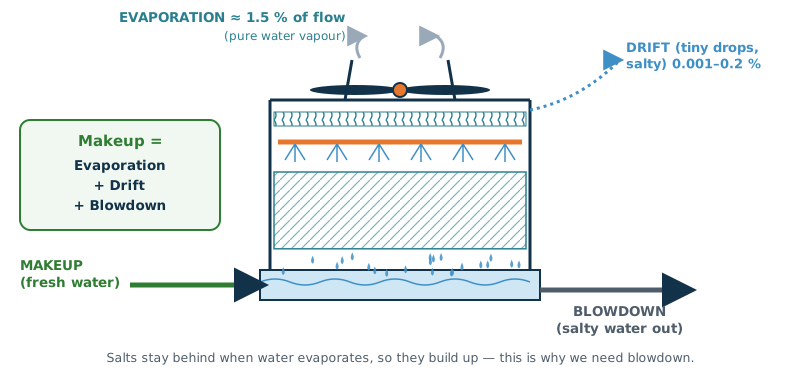
Evaporation = evaporation factor × circulating flow × range. Drift = drift % × flow. The salt balance gives blowdown + drift = evaporation ÷ (cycles − 1); makeup = evaporation + drift + blowdown. With drift credited, the highest possible cycles are (evaporation + drift) ÷ drift.
The example is the PlantCalcKit standard case, based on GPSA Engineering Data Book Example 11-7: 2,000 m³/h, 40/30/25 °C, 0.3 % drift, 4 cycles → evaporation 36, blowdown 6, makeup 48 m³/h.
Assumptions: steady operation; every loss other than evaporation (leaks, overflow, splash-out) counts as blowdown; cycles are measured with a salt that stays dissolved. References: Perry's Chemical Engineers' Handbook §12; GPSA Engineering Data Book Sec. 11; Marley/SPX Cooling Tower Fundamentals; Branan, Rules of Thumb for Chemical Engineers.